What is the difference between Slant/Fin baseboard series?
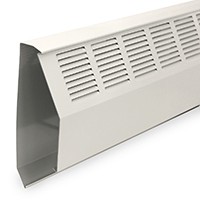
Fine/Line 30 is the most popular residential baseboard series, offering an excellent balance of quality, performance and affordability.
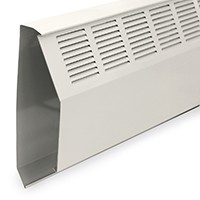
Base/Line 2000 is economy residential baseboard, a scaled-down version of the Fine/Line 30 which is well suited for projects with a tight budget. Steel thickness on these is a little less than Fine/Line 30 and the accessories (end caps, etc.) are simpler and not as abundant. However the heating element is the same and performance is nearly identical.
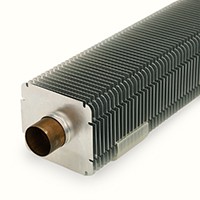
Multi/Pak 88 (formerly Multi/Pak 80) is a premium residential/light commercial baseboard with robust construction. Standard H-3 element offers a significantly higher output than the previous two series. Additionally, unlike Fine/Line 30 and Base/Line 2000, this series allows using various heating elements (besides standard H-3) to meet individual project requirements.
Revital/Line is not a separate baseboard series, instead these are universal, premium-grade replacement covers & end caps which seamlessly fit most older and current residential baseboards (Slant/Fin and many others).
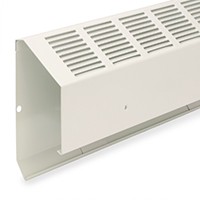
350-10 series is a true commercial baseboard with heavy-gauge steel construction, tamper-resistant design and slanted top (prevents sitting, placing of feet/belongings, etc.). Like other commercial baseboards, 350-10 series does not have a damper. It can be used with any Slant/Fit elements (from H-1 to H-6) and is suitable both for hot water and steam.
350-14 is a tall variation of 350-10 series with room for (2) heating elements, allowing either an increased heat output, or for a return line (especially useful where it it not possible to conceal the return line - concrete walls/floor, etc.).
HD-850 is the most robust commercial baseboard Slant/Fin offers. It puts even more emphasis on tamper resistance than 350-10 & 350-14 series (has screws which prevent removal of front panel & end caps) and has the thickest steel of all series.
Although the principle behind these baseboards remains the same, there are also specific differences which put these products into different categories. These are:
1. Output capacity - residential-only series (Fine/Line 30 and Base/Line 2000) both output about the same (~600 BTU/h per foot of length), whereas Multi/Pak 88 offers a higher base output (770 BTUs) and still higher one (up to 840 BTUs) with an optional H-1 heating element with "Jumbo" fins. Commercial 350-10, 350-14 and HD-850 series are also designed for higher output (varies by element of choice).
2. Durability - front panel of the baseboard is the part which is subject to the most damage - from mopping/vacuuming the floor, to accidental kicks and bumps. Thicker panel means more resistance to damage, below are the numbers for Slant/Fin series:
Base/Line 2000 - 23-gauge
Fine/Line 30 - 20-gauge
Multi/Pak 88 - 18-gauge
350-10 & 350-14 - 19-gauge
HD-850 - 16-gauge
3. The looks - in our opinion, Multi/Pak 88 has the best looks for the money, offset only by larger front-to-wall thickness (to accommodate for a bigger heating element). All the accessories in this line compliment the sleek, heavy-duty design which would fit well both in commercial and higher-end residential settings. Fine/Line 30 baseboard, as designed and intended by the manufacturer, has the 2nd place with it's wide range of rounded-corner accessories which makes this series look and perform well despite lighter design. Base/Line 2000 is the lowest-priced, lightest gauge baseboard, with no-frills accessories, intended for cost-sensitive installations.
Commercial 305-10/14 and HD-850 series put more focus more on performance, design and durability - just as they should.
4.
Tamper resistance - some applications, such as childcare & educational facilities, commercial settings such as offices, warehouses and retail spaces, healthcare and correctional facilities - require a baseboard which stands up to the abuse, whether intentional or not. These are commercial baseboards - Slant/Fin 350 series (-10 standard and -14 dual element) and HD-850 series. The former offers basic tamper protection (thicker steel, slope top, no damper), the latter offers the highest grade of tamper resistance, allowing to secure front cover with screws and effectively preventing it's removal and accessing the heating element.